
Wash and dry your feet every day
Wash with water and, if you are sweating heavily, with water and mild soap. Also dry carefully between the toes.
Pitted keratolysis refers to small pitted keratolysis caused by a superficial bacterial skin infection, also known as pitted keratolysis. Keep your feet clean and dry, change damp socks and alternate your shoes. Ask your GP for an assessment and treatment if you experience severe itching, pain or a strong odour, or if symptoms persist.
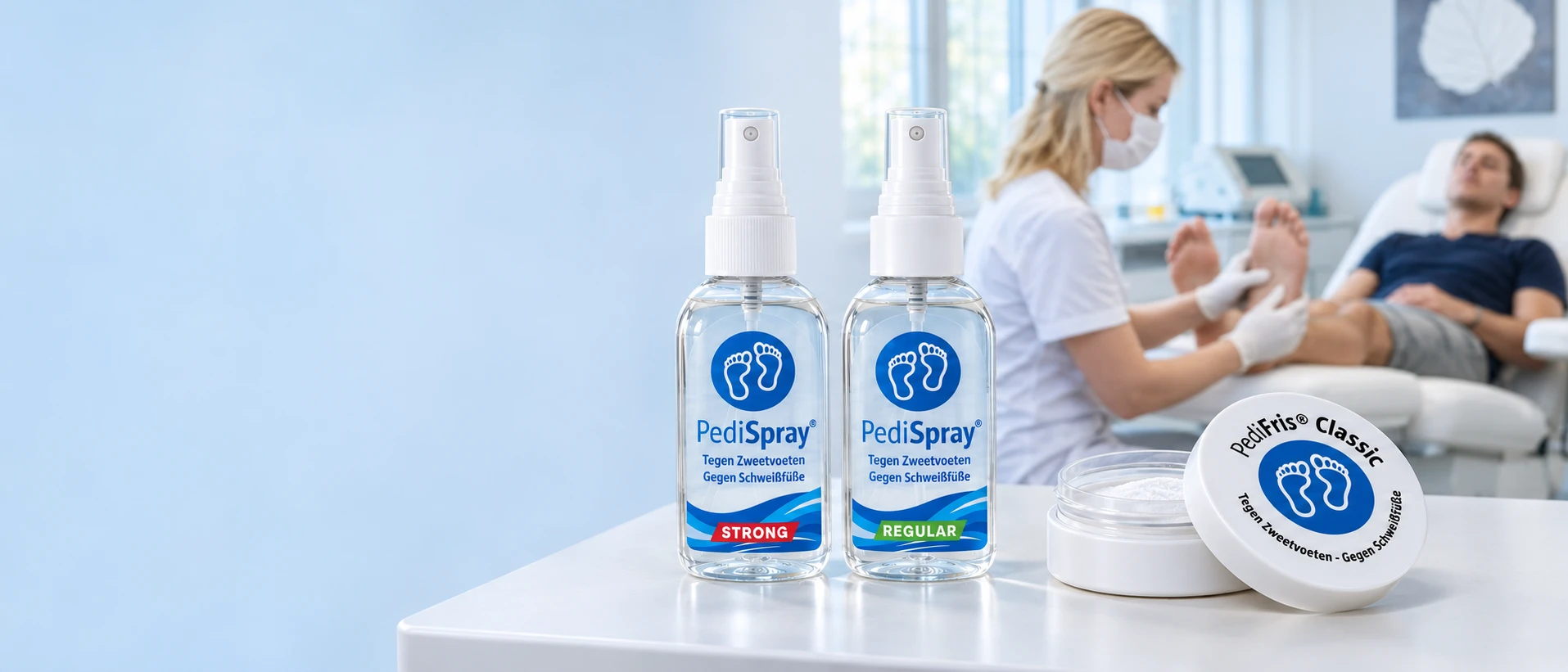
An antiperspirant can help with excessive sweating. A routine for both feet and shoes supports this approach, but is no substitute for treatment of the skin infection.
Pitted soles, also known as pitted keratolysis, cause many small craters in the uppermost layer of skin on the sole of the foot. The bacteria thrive particularly on warm, damp feet. A strong odour, white or soft skin and pitted areas at pressure points are characteristic. If in doubt, have the diagnosis assessed by your GP.
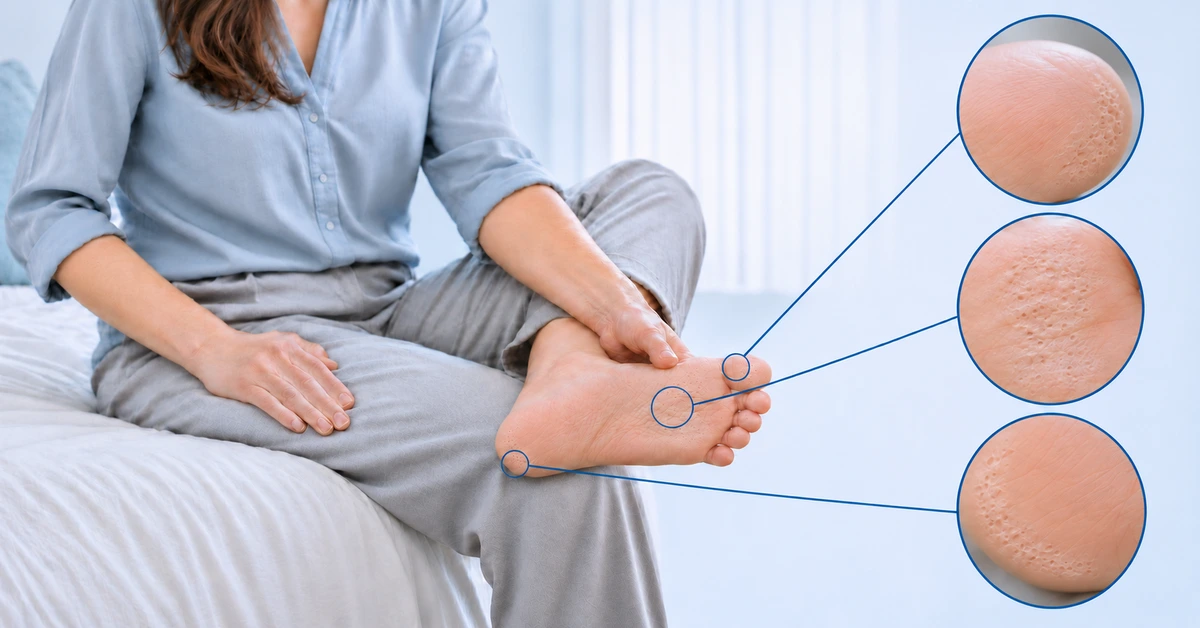
Pitted keratolysis can be recognised by small, superficial pits in the skin. They are mainly found in areas that bear pressure whilst standing and walking: the ball of the foot, the heel and the underside or edge of the big toe. The three close-ups in the image show these areas.
The pits vary in size and are sometimes close together. They can merge to form larger, irregular patches. When feet are damp, the skin can become white and soft, making the pits stand out more clearly.
Itching need not be present; a strong foot odour may be more noticeable. The image is for illustrative purposes only: skin changes vary from person to person. If in doubt, ask your GP to assess whether it is pitted keratolysis.
Small craters on the soles of the feet with a strong odour are characteristic of pitted keratolysis. Itching, flaking and cracks between the toes are more commonly associated with athlete’s foot.
Is the smelly build-up under the toenail, without any pits in the sole? If so, please read the explanation about toenail fungus.
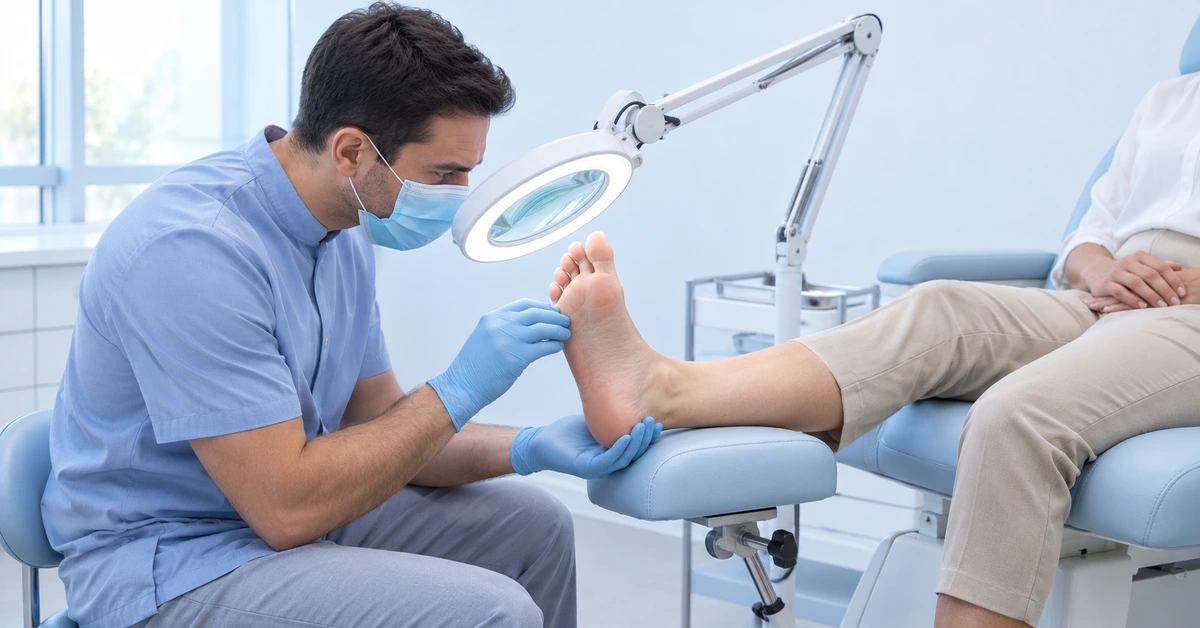
For pitted keratolysis, dry skin and good foot care are important. If you suffer from severe itching, pain or a strong odour, ask your GP for treatment. Your GP may recommend or prescribe a gel or cream to treat the skin infection.
Please contact us if you experience pain, cuts, inflammation, diabetes or symptoms that do not improve despite the prescribed treatment. Stop experimenting on your own if your skin becomes further damaged.
Start with a regular daily routine. Keep the skin clean and dry, minimise moisture build-up and allow worn shoes time to air out.
Wash with water and, if you are sweating heavily, with water and mild soap. Also dry carefully between the toes.
Put on clean socks every day and change them sooner if they become damp.
Do not wear the same pair every day. Remove the insoles and allow worn shoes to air thoroughly.
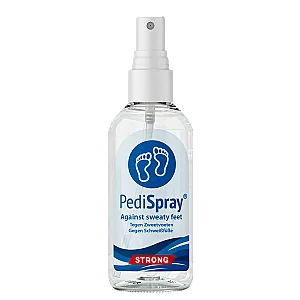
A foot antiperspirant helps to reduce the amount of moisture on the skin. Use it consistently as part of your routine.

 Ton
Poppe
john bergman
G
Arnold
Edith
Wjm Gertsen
Anoniem
Dennis Sluimer
 Martina Müller
No, pitted keratolysis is not contagious. The bacteria that cause the symptoms are found on the skin and can multiply rapidly in warm, damp conditions.
Allow for a treatment period of several weeks, not just one day. The duration depends on the chosen treatment and your symptoms. Thuisarts recommends a course of treatment lasting 3 to 4 weeks for a prescribed gel. Follow the duration of use advised by your GP or pharmacist; a reduction in odour does not automatically mean that the skin infection has cleared up.
Yes. If your feet are frequently warm and damp again, the symptoms may return. Therefore, even after recovery, continue to dry your feet thoroughly, change damp socks and alternate your shoes. Discuss persistent excessive sweating with your GP.
Adjust the level of exertion to suit your symptoms and follow any treatment advice given. Do not walk or exercise through pain or damaged skin; seek advice from your GP in such cases. After exercising, change out of damp socks and allow your trainers to dry thoroughly.
Contact your GP again if the prescribed treatment is not helping sufficiently, if your symptoms worsen, or if you experience pain, sores or signs of inflammation. If you have diabetes or a weakened immune system, seek advice promptly and do not wait for your condition to deteriorate further.
Written by Judith de Jong (Content owner, PediFris®). Updated on 6 November 2026. We base our advice on foot care practice and on the medical sources listed below.
Worried about a persistent complaint, fungal nail, athlete’s foot or excessive sweating? Consult your GP, podiatrist or chiropodist.

.svg)